Dubai Desert Safari Safety Tips -The Honest Guide
One of the most common questions we get is "is a desert safari safe?" The short answer is yes — Dubai runs thousands of desert safaris every single day and serious incidents are extremely rare. But the long answer has more nuance. The desert is not a theme park. There are real risks if you ignore basic precautions or book with the wrong operator. Here is everything you need to know to stay safe on your desert safari in Dubai.
Is dune bashing safe?
Dune bashing is the most thrilling part of a desert safari and the one that raises the most safety questions. Here is the reality:
- Professional drivers: licensed Dubai safari operators use trained drivers who have months of desert driving experience. They know the terrain, the vehicle limits, and how to read the sand. This is not random 4x4 driving — it is a skilled profession.
- Modified vehicles: the Toyota Land Cruisers used for dune bashing have modified suspension, roll cages, and tyres that are deliberately deflated for better sand grip. These are not regular road cars.
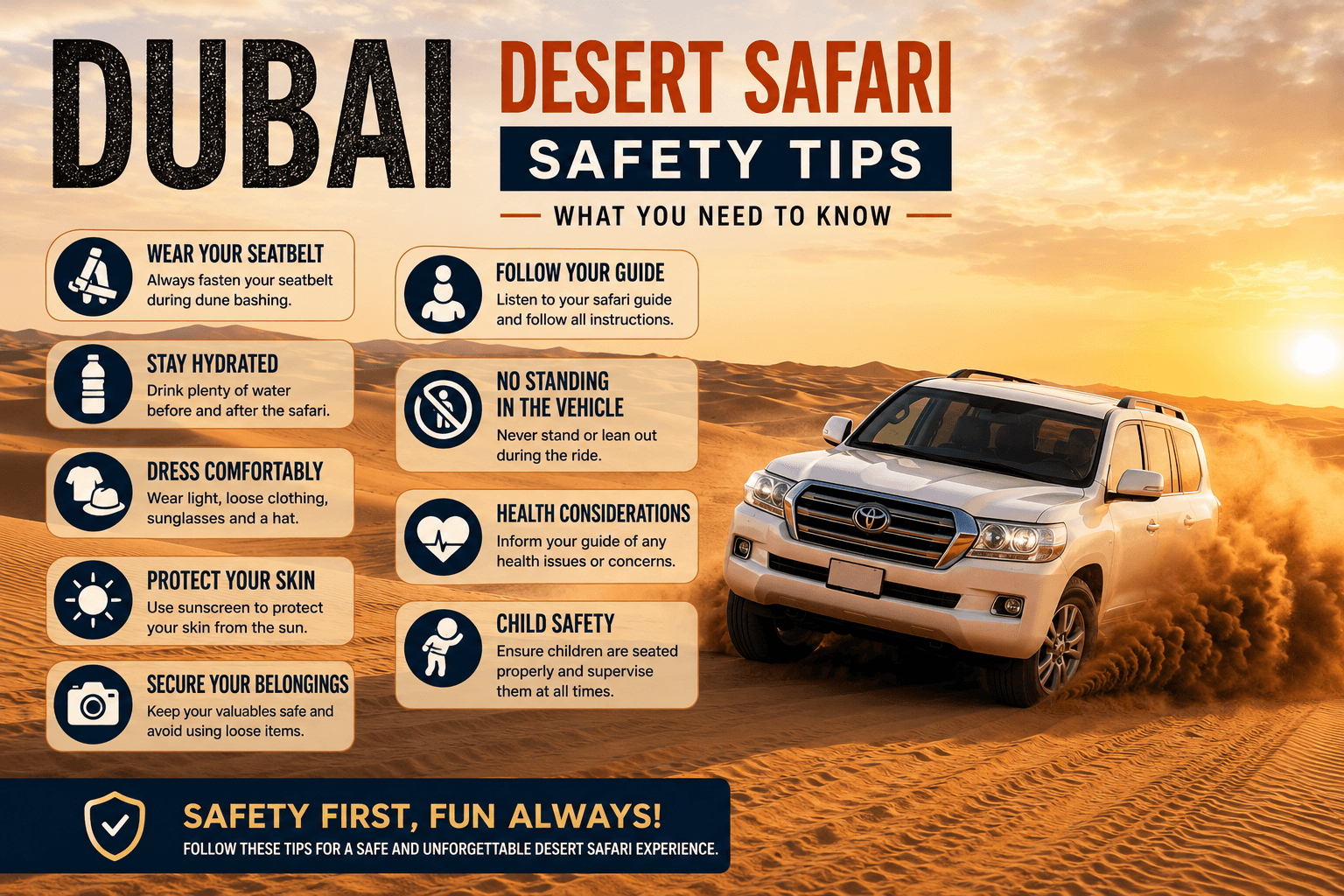
- Seatbelts mandatory: every passenger wears a seatbelt throughout the dune bashing portion. Drivers check before starting.
- Adjustable intensity: good operators adjust the driving intensity based on the group. Families with children get a gentler ride. Groups of young adults get a more aggressive experience. If you want it calmer, tell your driver at pickup — they will adjust.
The risk is real but low. The most common issue is motion sickness, not injury. If you have a weak stomach, sit in the front seat, look at the horizon, and avoid eating heavily before the ride.
Who should NOT do dune bashing
Be honest with yourself about these. The bumps and turns are intense:
- Pregnant women — the sharp turns and sudden drops are not safe during pregnancy at any stage. You can still join the safari but skip the dune bashing and go directly to the camp.
- People with serious back or neck problems — the jolts put real stress on your spine. If you have a herniated disc, recent surgery, or chronic back pain, skip the dune bashing portion.
- Children under 3 — most operators do not allow toddlers on dune bashing. The movements are too intense for very young bodies. Children 3 and above are welcome with seatbelts.
- People with heart conditions — the adrenaline and physical jolting can be stressful for those with serious cardiac issues. Consult your doctor if unsure.
- Anyone who gets severely motion sick — if you cannot handle roller coasters or boats, dune bashing will be difficult. Take motion sickness medication 30 minutes before if you want to try.
If any of these apply to you, you can still enjoy the rest of the safari. The evening desert safari includes camel riding, sandboarding, camp activities, dinner, and entertainment — all of which are gentle and safe for everyone. Just ask your driver to take you directly to the camp and skip the dune bashing.
Heat safety -the biggest underestimated risk
More people have bad experiences from heat than from dune bashing. Dubai desert temperatures can exceed 45°C in summer. Even in winter, the afternoon sun is strong. Read our summer desert safari guide for seasonal details. General heat safety rules:
- Drink 1-2 litres of water in the 2 hours before your pickup. Arrive hydrated — do not rely on the water at the camp, which comes after the hottest part of the trip.
- Apply sunscreen SPF 50+ before pickup. The sunset photo stop and camp arrival happen in direct sunlight.
- Wear a hat or cap for the outdoor portions. Sunglasses are essential.
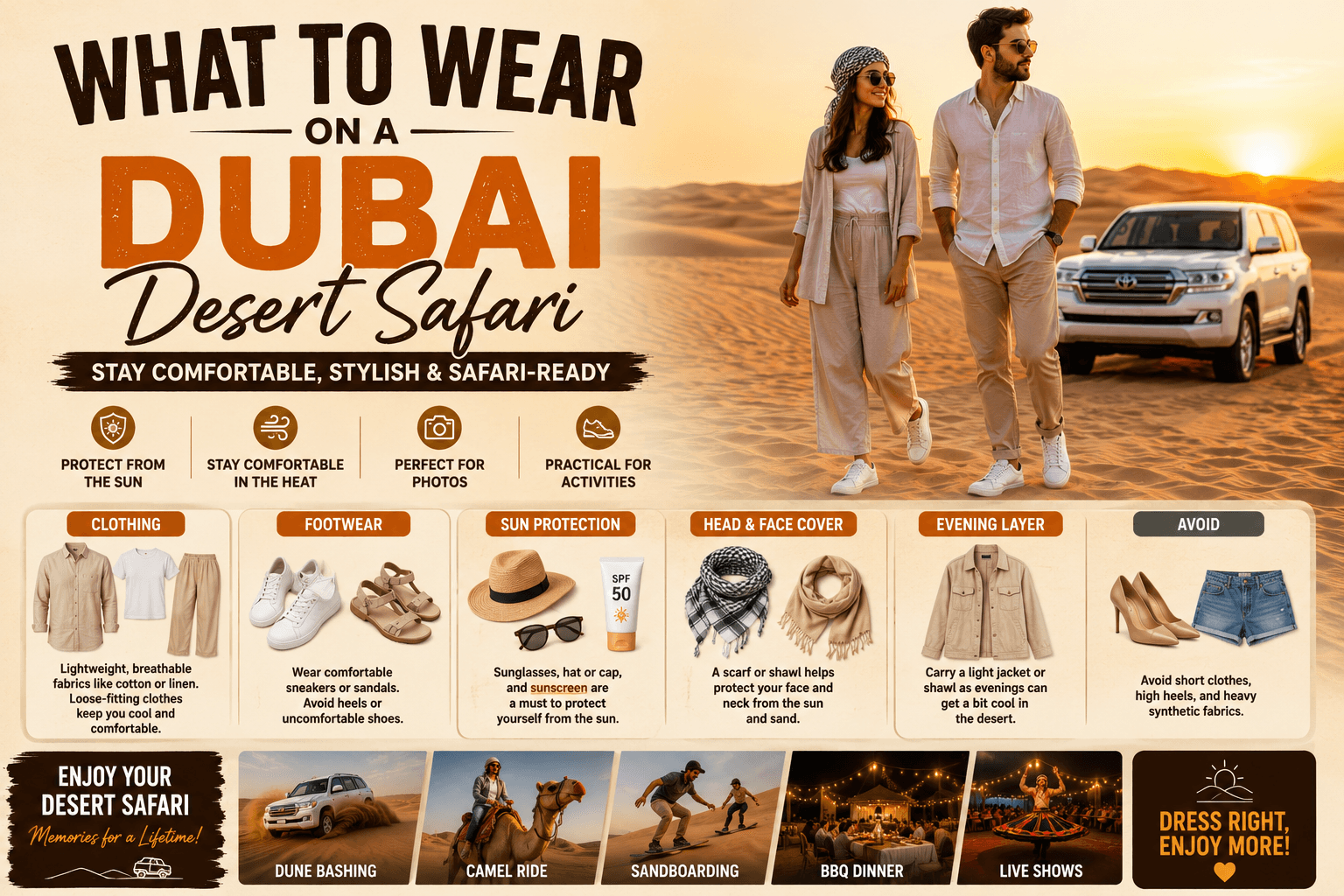
- Light, loose clothing in light colours. Avoid dark clothes that absorb heat.
- If you feel dizzy, nauseous, or confused — tell your driver or camp staff immediately. These are early signs of heat exhaustion. Move to shade, drink water, and cool down.
Check our what to wear on a desert safari guide for complete clothing advice for summer and winter.
Food and water safety at the camp
Licensed desert camps in Dubai follow food safety regulations. The BBQ buffet dinner at reputable camps uses fresh ingredients prepared on-site. That said:
- Eat from the buffet when it is freshly served — do not eat food that has been sitting out for a long time in the heat.
- Drink bottled water only. Camp water stations use sealed bottles — never drink from open containers.
- If you have food allergies, inform your operator at booking. Most camps can accommodate allergies but need advance notice.
- Vegetarian options are standard at all licensed camps. Vegan options are available at most but confirm when booking.
How to choose a safe operator
This is the most important safety decision you make — more important than what you wear or eat. Here is what to check:
- DET license — every legitimate Dubai tour operator is registered with the Department of Economy and Tourism. Ask for the license number if it is not displayed on the website. Unlicensed operators skip vehicle maintenance and insurance.
- Vehicle condition — licensed operators use well-maintained Land Cruisers with working seatbelts, roll cages, and proper tyres. If the vehicle looks old, damaged, or poorly maintained at pickup, refuse the ride and ask for a replacement.
- Recent Google reviews — read the 1-2 star reviews specifically. Complaints about reckless driving, broken seatbelts, or sick passengers are red flags. A few bad reviews out of hundreds is normal. A pattern of safety complaints is not.
- Insurance — reputable operators carry liability insurance. Ask about their insurance coverage if you want peace of mind.
- Price too low — if a safari costs less than AED 80 per person, question how they are cutting costs. The cheapest operators save money by skipping vehicle maintenance, hiring untrained drivers, or using substandard camps.
Desert wildlife and environment safety
- Snakes and scorpions exist in the Dubai desert but encounters during safaris are extremely rare. Camps are cleared and maintained. Stay on designated paths and do not walk barefoot in the open desert after dark.
- Sand flies can bite, especially near camp lights in the evening. Insect repellent helps but is not essential for most people.
- Sand in eyes and ears — during dune bashing, sand can blow into the vehicle if windows are open. Keep windows closed during the drive. Bring a scarf to cover your face if it is windy at the photo stops.
- Do not walk away from the camp alone at night. The desert is dark and disorienting without landmarks. Stay within the lit camp area.
Emergency preparedness
- All licensed operators carry first aid kits in their vehicles.
- Mobile phone signal is available in the Lahbab desert area — you will have coverage.
- Dubai ambulance (998) and police (999) can reach the desert within 30-45 minutes.
- If you have a medical condition (diabetes, asthma, allergies), carry your medication with you and inform your driver.
Safety for families with children
We have a full desert safari with kids guide covering age limits, what children enjoy, and family-specific safety tips. The key points:
- Children 3+ can do dune bashing with seatbelts. Drivers adjust intensity for families.
- Bring sunscreen, hats, and water for children — they dehydrate faster than adults.
- The camp is safe for children to walk around freely. Activities like henna painting, camel riding, and sandboarding are all child-friendly.
- A light jacket for children in winter — desert evenings get cold after sunset and kids feel it more.
The bottom line on safety
Dubai desert safaris are a well-regulated, professionally operated tourism product. Thousands of people do them every day without incident. The risks are real but manageable with basic precautions: stay hydrated, wear sunscreen, book with a licensed operator, and be honest about health conditions. Browse all desert safari packages and book with confidence. WhatsApp +971 55 534 6567 for any safety questions before booking.